
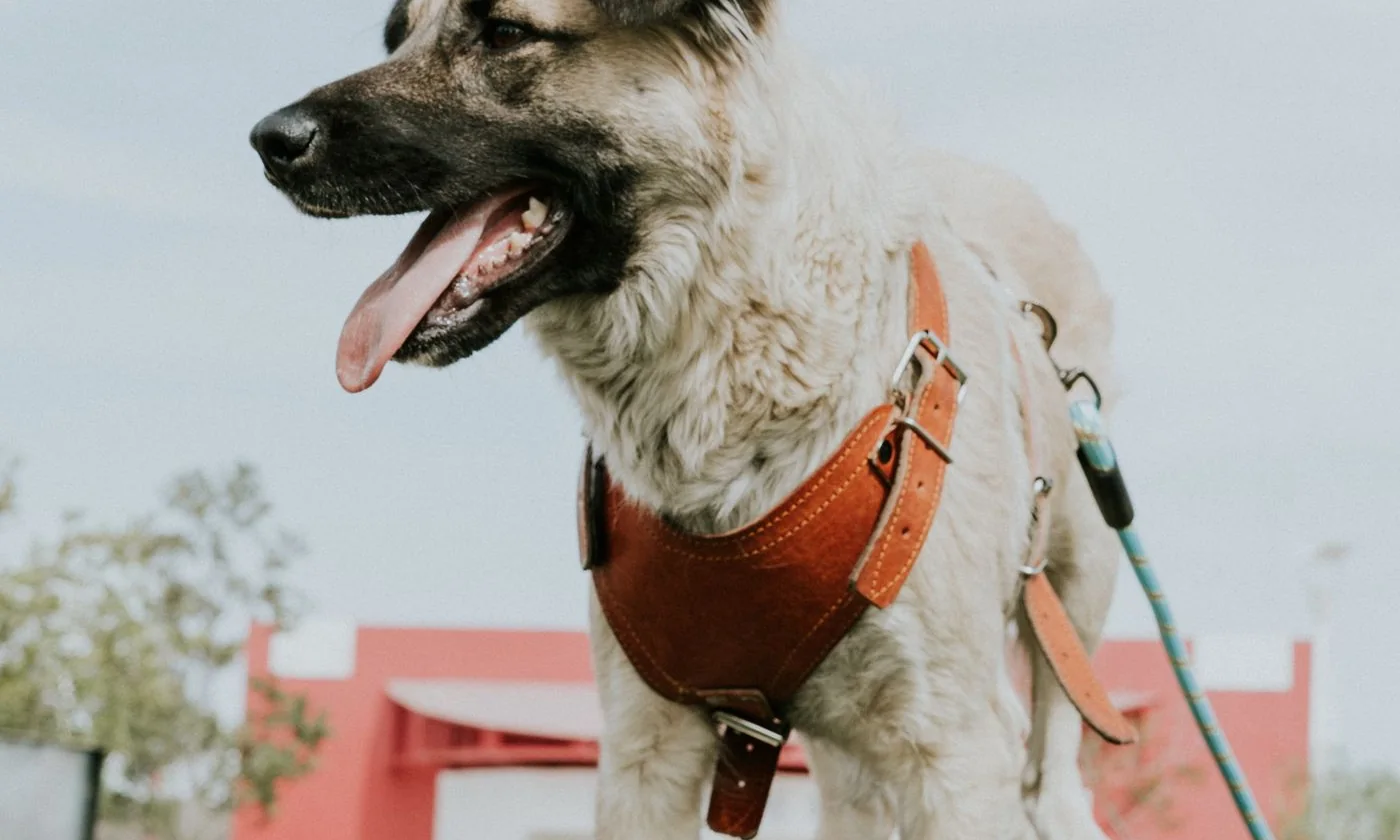
A busy sidewalk can turn a routine walk into a struggle when a dog surges toward smells, squirrels, or greetings. A well-fitted harness can give the handler a more useful connection, but equipment alone does not teach loose-leash walking.
What matters most
- Several adjustment points that keep straps away from the throat and front-leg movement.
- Secure hardware and stitching appropriate to the dog’s size and strength.
- A fit that the dog cannot easily back out of during a startled moment.
Choose by your situation
| Suitable for | Who it suits | Why it works | Tradeoff |
|---|---|---|---|
| Front-clip harness | Handlers working on forward pulling | The chest attachment can redirect some forward momentum. | The leash may cross the front legs if fit or handling is poor. |
| Dual-clip harness | Training plans that use two points of contact | Offers front and back options as skills and settings change. | More straps and hardware require careful adjustment. |
| Three-strap escape-resistant harness | Nervous dogs and narrow-bodied breeds | An extra body strap can make backing out more difficult. | Takes longer to put on and may trap more heat. |
These are product-type recommendations, not paid placements or claims of hands-on testing. Confirm current specifications, compatibility, availability, and warranty terms with the manufacturer or retailer before buying.
Buying advice for everyday use
Think through where the product will live, who will use it, and what maintenance fits your routine. A feature has value only when it solves a recurring problem without adding more friction than it removes.
- Recheck fit after the dog moves, sits, and walks rather than judging it while standing still.
- Pair equipment with short, consistent reward-based walking practice.
What to avoid
- Leaving a harness on unattended when it could catch on furniture or a crate.
- Choosing by weight alone when chest shape and strap placement determine fit.
Use the priorities above while checking current product details and retailer terms.
Frequently asked questions
Will a no-pull harness stop pulling immediately?
It may improve handling, but lasting loose-leash behavior usually requires consistent training and suitable exercise.
How tight should a dog harness be?
It should remain secure without rubbing or restricting movement; follow the maker’s fitting method and inspect the dog after walks.
How this guide was prepared
Rated Picks compares product categories around real household and travel scenarios, published specifications, ownership demands, and common tradeoffs. We do not claim laboratory or hands-on testing where none occurred. Read our editorial standards.
 Automatic Pet Feeders: Planning More Predictable Mealtimes
 Pet Cameras: Staying Connected While You Are Away
 Choosing a Litter Box for a Small Apartment